

By Ijait Aluku- Program Officer – Land and Housing
Across Kenya, efforts to conserve biodiversity and manage natural resources continue to overlook a powerful truth: sustainable conservation is not possible without the people who live on the land and call it home. From forest margins in Mau to informal settlements in Nairobi, to riparian zones in Lake Nakuru, decisions about resource use, zoning, and ecosystem restoration are still made with limited—if any—community input. This exclusion is not only unjust and unconstitutional, it’s self-defeating. Without the knowledge, consent, and participation of Indigenous Peoples and Local Communities (IPLCs), conservation becomes a ticking time bomb.
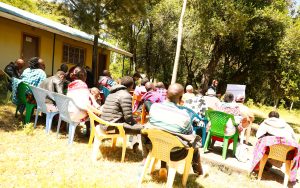
Stakeholders engagement in Narok County
Hakijamii, under the Leading the Change Phase 2 (LTC 2) project supported by WWF Kenya, has been working to challenge this paradigm. At the core of this work is building the capacity of civil society organizations (CSOs) to assert human rights in natural resource governance processes. Our recent engagements with these stakeholders have shown that many CSOs at the county level still lack the technical grounding and political access needed to participate meaningfully in environmental planning. The story is even more dire for community-based groups, especially those led by women and youth, who often face institutional and cultural barriers to participation.
But the tide is turning. In Nakuru, for example, sustained engagement with the Kenya Wildlife Service (KWS), county officials, and CSOs in reviewing management plans has proven that change is possible when space is created for communities to speak—and be heard. What began as a highly technical process is now opening the door for policy shifts on strengthening community livelihoods, and equitable benefit sharing. This is the change LTC 2 is designed to catalyze—where duty bearers not only legislate for inclusion but create platforms for rights-holders to shape decisions from the start. As climate change intensifies resource scarcity, inclusive conservation is no longer a debate. It is a necessity.
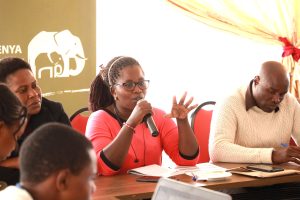
Stakeholders engagement in Nakuru County

