
What Is The Mwakirunge Case About?
Ainea Ragen v County Government of Mombasa & 6 Others
Petition filed: 9 May 2022 | Judgment delivered: 25 September 2026
The case concerned the operation and management of the Mwakirunge dumpsite in Mombasa and its impact on the rights of surrounding residents and the environment. It was filed by Ainea Ragen, on his own behalf and on behalf of Mwakirunge Community Residents, against the County Government of Mombasa and other government agencies and officials.
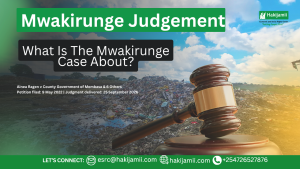 The Petition challenged, among other things:
- Poor management and disposal of solid and liquid waste;
- Environmental degradation and pollution;
- Impacts on residents’ health, safety and livelihoods;
- Inadequate access to information on waste-management services; and
- Concerns over the use and accountability of public funds allocated to the dumpsite.
The Court ultimately found that the Petitioner had “by and large been able to establish its case.”
What Did The Petition Seek To Achieve?
The Petition sought to protect the rights of Mwakirunge residents and secure corrective action at the dumpsite.
Among the key remedies sought were:
- Recognition of the site as community land;
- Declarations that residents’ rights had been violated;
- An independent environmental audit to establish the extent of environmental damage and the cost of remediation;
- Environmental restoration of the dumpsite and surrounding affected areas;
- A permanent injunction against dumping at the site;
- An alternative dumping site;
- Investigations into the management and use of public funds allocated to the dumpsite; and
- Compensation for affected residents.
The Court granted some remedies and declined or deferred others:
Granted
- Declarations that constitutional rights and obligations had been violated;
- An independent environmental audit;
- KSh 350 million in compensatory damages;
- Forensic investigations by EACC and DCI into specified financial matters.
Declined
- Declaration that the dumpsite sits on community land;
- Permanent blanket injunction against dumping;
- Order to secure an alternative dumpsite within 90 days;
- The prayer directing the Auditor-General to undertake a specific forensic audit.
Deferred
- Environmental restoration, pending the findings of the independent environmental audit.
What Should Happen Next?
The judgment provides an important framework for implementation, accountability and follow-up. The focus now should be on ensuring that the Court’s orders translate into meaningful change for Mwakirunge residents.
-
Effective execution of the judgment
The County Government of Mombasa and other responsible agencies should implement the Court’s environmental and waste-management directions within the prescribed timelines.
-
Strengthen community participation and access to information
Mwakirunge residents and community representatives should have meaningful opportunities to participate in monitoring implementation and access information on environmental restoration, the Ksh 350 million award and progress under the judgment.
-
Promote transparent reporting and accountability
NEMA and the 1st–5th Respondents are required to report to the Court every three months on progress in the management and disposal of solid and liquid waste. The EACC and DCI are to undertake independent forensic investigations, with EACC required to report within 180 days on findings and progress concerning the financial matters identified in the judgment.
-
Sustain the compliance process
The Petitioner, affected communities and relevant stakeholders can use the Court’s compliance process to follow implementation, identify outstanding issues and seek further directions where necessary.
The judgment is an important legal outcome. Its longer-term significance will depend on effective implementation, meaningful community participation, transparent reporting and sustained follow-up on environmental restoration and accountability.
By Ijait Aluku – Program Officer, Land & Housing-Hakijamii

