

By Ijait ALuku Program Officer-Land, Housing and Litigation
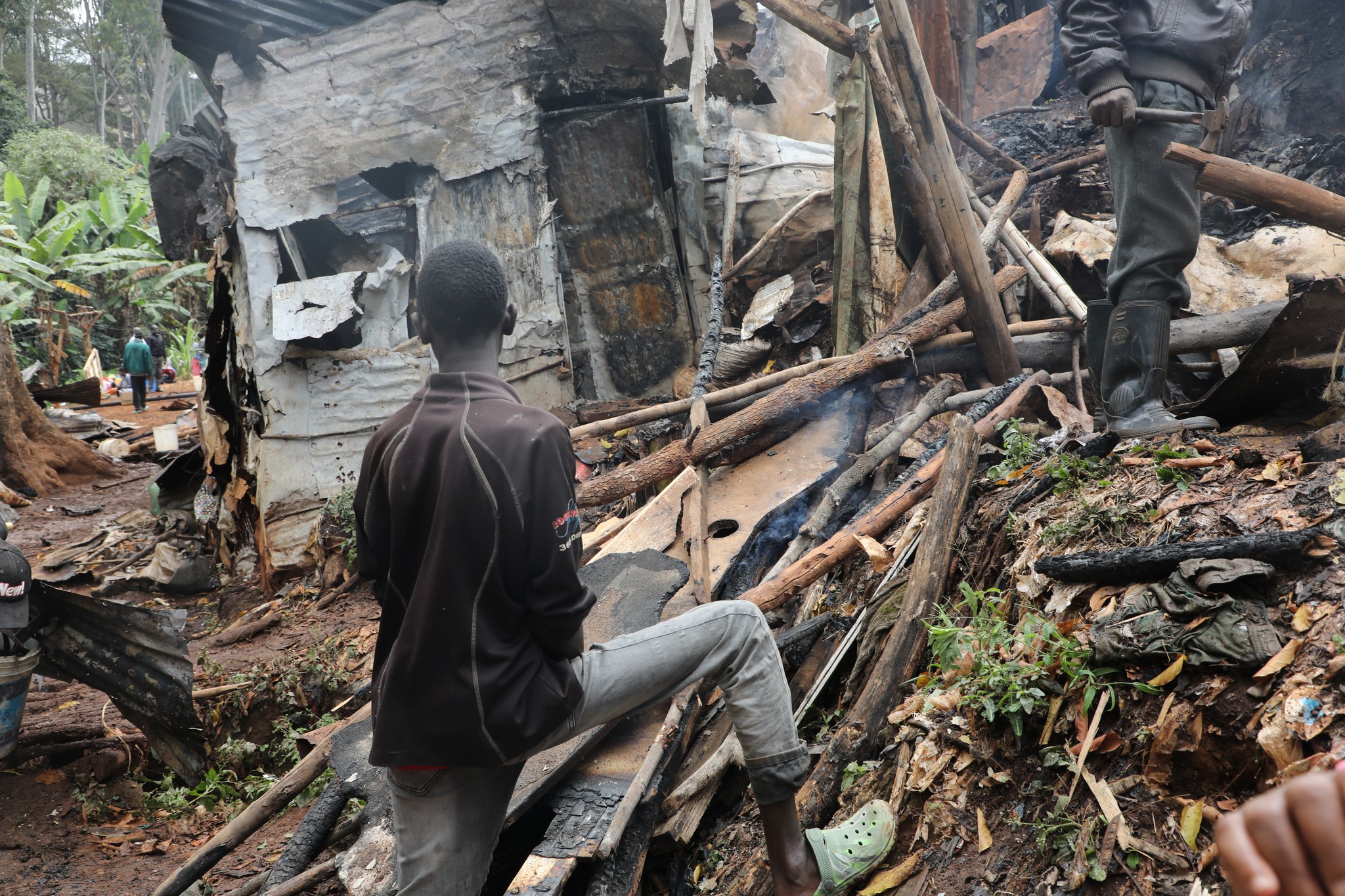
For many families in Nairobi’s informal settlements, the greatest fear is not hunger or joblessness—it is eviction. A knock at dawn, bulldozers at the edge of the settlement, and families left without shelter: this is the daily anxiety for thousands living in places like Kibera, Mukuru, Mathare and Deep Sea. Evictions here are rarely planned with humanity in mind. They come abruptly, often arbitrarily, and with little regard for dignity or constitutional protections.
At the heart of this crisis is tenure insecurity. Irregular land allocations leave families vulnerable to being evicted overnight. Inconsistent enforcement of riparian reserve rules means demolitions can happen without warning. Court cases drag on for years while residents live in limbo. The unfortunate disconnect is that these communities are not resisting urban planning, they are resisting invisibility.
Behind the bulldozers lie deeper structural problems: no formal recognition of land ownership, opacity in government processes that exclude residents, and a justice system that remains out of reach for the poor. Even when cases reach the courts, virtual hearings and expensive legal procedures make it very difficult for affected families to defend their rights. For women and youth, exclusion is even more pronounced— often most affected by evictions, they are the least included in land policy discussions.
What makes the crisis worse is weak coordination. Civil society responses are fragmented, making it easier for state institutions to evade accountability. For communities, however, unity is not strategy, it is survival.
Practical solutions therefore start with working together through collective spaces built around a common goal: land justice. One such space is the Nairobi Land Justice Working Group (NLJWG), launched in 2024 by Chief Justice Martha Koome. For actors like Hakijamii and the Food and Agriculture Organization of the United Nations and the European Union (FAO/EU), it creates an avenue to connect communities with administrators, civil society, and legal experts. More importantly, it reframes land governance from abstract policies into urgent human rights questions: how can we ensure families in informal settlements do not live in constant fear of demolition?
Secure tenure is not just about land. It is about dignity, security, and the right to belong. Nairobi cannot claim modernity while its most vulnerable residents are mistreated and seen as disposable. The way forward is clear: the government must enforce constitutional protections on evictions, courts must lower barriers to justice, and civil society must act in unison. Until then, every new day in Nairobi’s informal settlements risks becoming someone’s last day at home.

