

By Ijait Aluku Program Officer – Land and Housing
The shift to digital land governance in Kenya through platforms like Ardhisasa and community land registration frameworks, is being hailed as a leap forward in transparency. But for informal settlements in Nairobi and vulnerable communities in counties like Narok, Nakuru, Isiolo and Mombasa, the digital transition has surfaced new forms of marginalization. Under the Digital Land Governance Project, supported by the European Union (EU) and The Food and Agriculture Organization of the United Nations (FAO), Hakijamii is working to ensure that digitization doesn’t become another barrier to securing land rights especially for the marginalized communities.
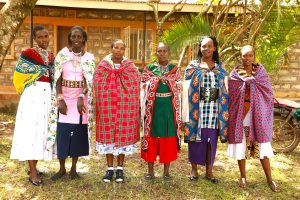
Women from Loita Community in Narok County
In counties like Narok, Nairobi and Nakuru, our continuous engagement with communities have revealed that most residents have little knowledge of the digital land processes underway or how to effectively engage with them. Women, in particular, face systemic obstacles; from lack of documentation and digital literacy to underrepresentation in land adjudication spaces. Hakijamii’s paralegal trainings, continued capacity building and structured advocacy are empowering these communities to claim space in ongoing digitization reforms. Through these interventions, community members are uncovering critical gaps such as the risk of land loss from the elite captured in digitized land registration processes and are actively contributing to solutions while championing community-led stewardship of natural resources.
For digital land governance to be truly transformative, it must embed equity, participation, and legal empowerment at every stage. The lived realities of communities at the margins must shape how systems are designed and rolled out. As the Kenyan government expands land digitization, Hakijamii calls for sustained public education, legal aid support, and community feedback mechanisms especially where communal, cultural and informal land rights are at stake.
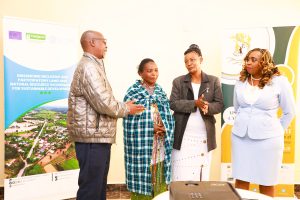
Training of communities in Narok County on Alternative Justice Systems (AJS)

